As we wrap up 2010, I wanted to say thanks to the people who continue to support this blog. I’ve had the opportunity to attend several trips and meet dozens of people in the technology blogger world, and I’ve enjoyed every minute of it. I have several blog stories in the works for the first part of January 2011, starting with a complete write up of HP and IBM blade offerings after which I will finish up with a summary giving my opinion on who has the best blade server, so stay tuned. As part of my final blog posting for 2010, I thought it would be fun to give you some details about BladesMadeSimple.com and what was hot, and what was not, so here we go.
Author Archives: Kevin Houston
Yet Another Movie Chooses HP
I have a scoop that another movie recently chose to use HP blade servers to finalize production. While I can not disclose the studio, I can say that it is not their first venture with HP blade servers. Continue reading
Lessons Learned from Dell OEM Day
At the conclusion of a long day in Austin, I decided to take a few minutes to provide some thoughts about what I learned today. Continue reading
Dell’s Super Secret Society
On Tuesday I have the pleasure of joining a handful of other bloggers in Round Rock, TX, to visit with one of Dell’s top secret societies Continue reading
What’s Your Problem??
I’m deviating from the norm today to ask you a question: what’s your problem? I ask not in a sarcastic way, but in a serious way. Writing about blade servers is fun, but I’m looking to write up some posts on what problems blade servers, or x86 servers in general, help solve – and I’m looking for your feedback. Of course, I could rely on the marketing that vendors provide on how they can “increase your ROI” or “reduce your TCO”, but I want REAL issues from you, the reader, and not a bunch of corporate buzz words. Continue reading
IBM Gains Blade Server Market Share in Q3 2010
IDC came out with their 3Q 2010 worldwide server market revenue report last month which shows that IBM grew from Q2 2010 in their blade market share. Continue reading
Fujitsu Teams up with NetApp to Design a Storage Blade
Continuing with my theme from yesterday of “purpose-built” blade servers, today we take a quick look at a new offering from Fujitsu. Now, as you may have noticed, my site has traditionally been focused on blade servers from Cisco, Dell, HP and IBM but this offering from Fujitsu is so interesting, I figured I would write something up. Titled under the PRIMERGY SX label, Fujitsu’s storage blades combines Data ONTAP-vTM software from NetApp, blade hardware and an unknown hypervisor to create a “fully integrated virtual storage appliance.” The storage solution supports iSCSI, CIFS and NFS protocol and is based on Data ONTAP-vTM features such as SnapShot, FlexVol, SnapRestore and FilerView.
The storage blades come in two flavors:
PRIMERGY SX960 S1 – a storge blade that can hold up to 10 additional hot-plug SAS or SATA HDD/SSD. These drives offer high capacity with up to 5 TB SATA HDDs, 3 TB with top-quality 2.5- inch SAS drives and up to 640 GB with power-saving 2.5-inch SATA SSDs. The only catch is that you can only fit 2 of these storage blades into a single chassis.
PRIMERGY SX940 S1 -a storge blade that can hold up to 4 additional hot-plug SAS or SATA HDD/SSD. These drives offer high capacity of up to 584 GB with high quality SAS drives, up to 2 TB with SATA HDDs .
I understand that Fujitsu is nearly non-existent in North America, but overseas they are well-known. As well, the purpose of this post to showcase that Fujitsu is putting NetApp’s software expertise onto a blade footprint to be used as a single purpose – to create a virtual storage array. As blade servers become more more mainstream, I expect to see more vendors team up to offer these types of integrated solutions.
For more information on Fujitsu’s servers, please visit:
http://ts.fujitsu.com/products/standard_servers/blade/bx400/storageblades.html
A special thanks to Chris Mellor for his write-up on this Fujitsu offering as seen on theregister.co.uk. Сайт знакомств
groupon houston
alcohol poisoning symptoms
endometriosis symptoms
foundation grants
strep throat contagious
Another Hidden HP Secret: P4000sb Storage Blades
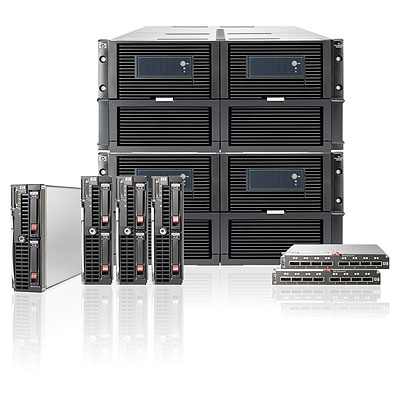 I recently found another hidden gem within HP’s arsonel of offerings that combines the HP StorageWorks line with the HP Proliant BladeSystem line. The solution is found within an HP bundle titled, “HP StorageWorks P4800 G2 63TB SAS BladeSystem SAN Solution” and is quite an offering. Continue reading
Still Confused About Cisco’s Blade Market Share
I recently received a comment on my previous post concerning Cisco’s market share (“What’s the Truth About Cisco’s Market Share“) which has me more confused. The comment admits that Cisco has not released any market share data to IDC, but that when you look at the Cisco Q1 2010 Earnings Call and compare it to IDC’s findings of the overall industry you should be able to derive conclusions from there. That’s where it gets confusing. Continue reading
HP Earns Market Leader Award for Blade Servers
 HP was recently awarded the title of Market Leader for Blade Servers in November 2010 by IT Brand Pulse Labs which specializes in providing independent, third party testing and lab reports. Continue reading