Category Archives: Dell – Dell EMC

Best Practices for Using the Dell Force10 MXL in Cisco Nexus Environments

One of the best offerings that Dell has within their blade server I/O portfolio is the Dell Force10 10/40 GbE MXL Switch Module.  You can check out the full details on my earlier blog post, but at a high level, this switch provides 32 x 10GbE ports downstream to the blade servers while offering up to 6 x 40GbE ports up stream.  In addition, up to (6) MXL switch IOMs can be stacked using ring or daisy-chain topology giving it a stacking bandwidth upstream of 320G all while providing intra-chassis communication allowing servers to talk to each other without going out to the Access layer.  But, if you have a Cisco network, will this work?  Believe it or not, Dell and Cisco can play nice together.

The engineers at Dell recently released an easy-to-use guide of recommended basic deployment practices for the Dell Force10 MXL in the access layer of a Cisco Nexus network environment.  I have to warn you though – it’s not for the faint at heart, as it includes detailed command line verbage on how to set it up.  If you know what the command ” # feature enable vpc” does within NX-OS, you’ll appreciate this document.  The guide is broken up topically as follows:

  • the and concepts of MXL switch deployment
  •  introduction to the Force10 MXL hardware and its connectivity and management options
  • the first steps of MXL deployment (including a rapid introduction to some common MXL initial deployment tasks)
  • downlink (server-side) configuration options
  • Link Aggregation Group Configuration
  • Uplink configuration options to the Cisco Nexus network environment: running PVST with discreet LAGs nd running PVST with a single LAG connected across two top-of-rack switches that are using a Multi-chassis LAG
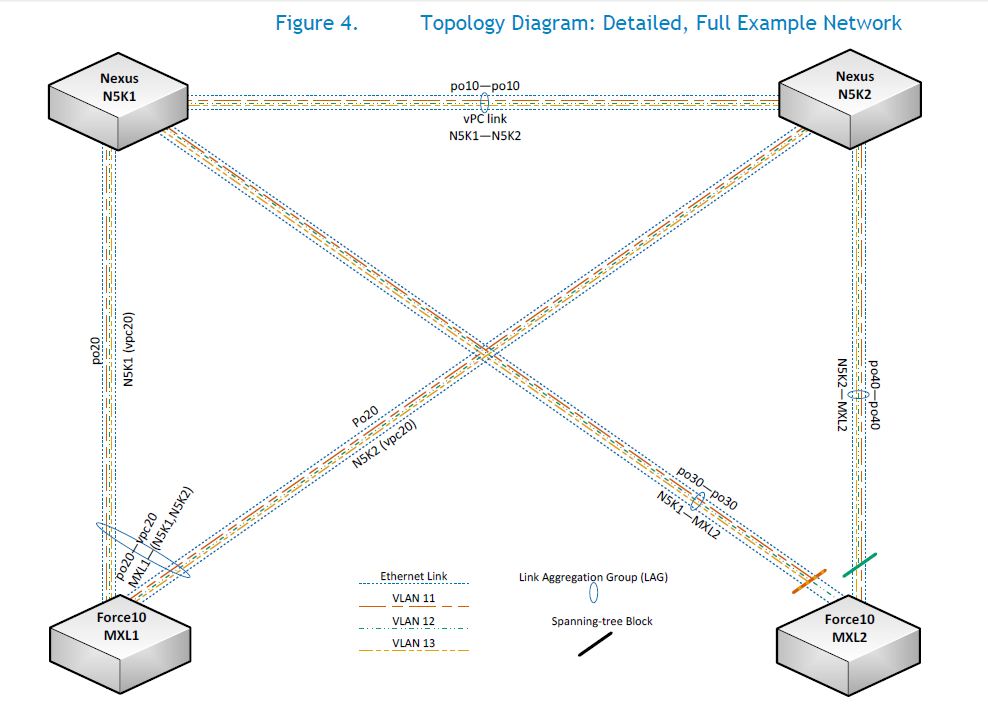
Sample Network Topology for Dell Force10 MXL and Cisco Nexus NetworkIf you have a Cisco Nexus network, take a few minutes to see how easy it is to add a Dell Force10 MXL into your environment.    You might just be surprised at what you find.

Download the complete whitepaper titled, “Deploying the Dell Force10 MXL into a Cisco Nexus Network Environment” at http://bit.ly/DellMXLonNexus

Kevin Houston is the founder and Editor-in-Chief of BladesMadeSimple.com.  He has over 15 years of experience in the x86 server marketplace.  Since 1997 Kevin has worked at several resellers in the Atlanta area, and has a vast array of competitive x86 server knowledge and certifications as well as an in-depth understanding of VMware and Citrix virtualization.  Kevin works for Dell as a Server Sales Engineer covering the Global 500 market.

 Disclaimer: The views presented in this blog are personal views and may or may not reflect any of the contributors’ employer’s positions. Furthermore, the content is not reviewed, approved or published by any employer.

First Look–Dell PowerEdge M I/O Aggregator

[updated 10.11.2012] In many data centers, rack servers offer organizations the ability to keep server and networking responsibilities separated. However, when blade servers are introduced into an environment, the server and network admins roles start to blur. Should the server admin have to learn networking, or should the networking admin have to learn blade servers? Continue reading

Dell Scores Editor’s Choice Award from InfoWorld

InfoWorld Editors Choice Award LogoInfoWorld.com’s Test Center awarded Dell’s blade server portfolio the “Editor’s Choice” award today.  Senior Contributing Editor, Paul Venezia, says, ” From a purely hardware perspective, the Dell PowerEdge M1000e is quite a compelling system. Continue reading

IDC Worldwide Server Tracker for Q2 2012 Shows Blades Continue to Grow

IDC came out with their Q2 2012 worldwide server market revenue report on August 28, 2012 which shows that a 4.3% drop in server revenues worldwide, marking the third straight quarter of decline. Continue reading

Performance Results – HP BL660c vs Dell M820

A few days ago I compared the HP ProLiant BL660c blade server with the Dell PowerEdge M820, so today I wanted to point you to some performance data.  Brian Basset, a Performance Engineer within Dell’s Solutions Performance Analysis group, recently ran some SPEC benchmarks on both the HP BL660c and the Dell M820 and the results were interesting.  In summary: Continue reading

HP BL660c vs Dell M820 – A Comparison

If you are a recurring reader to this blog, you’ll know that I work for Dell (1 year as of August 15) which makes me a bit bias toward Dell.  However, with the recent announcements of 4 socket blade servers based on Intel’s E5-4600 processor by HP and Dell, I thought it would be interesting to see how they line up.  With the attempt to be unbiased, I’ve listed everything I thought was relative about both servers so that you, the reader, could make your own decision about which server would work best in your environment.  I welcome any feedback, thoughts or comments below.  The data below is from HP and Dell’s websites and is current as of 8.14.12. Continue reading

Dell Announces Their First Storage Blade: PS-M4110

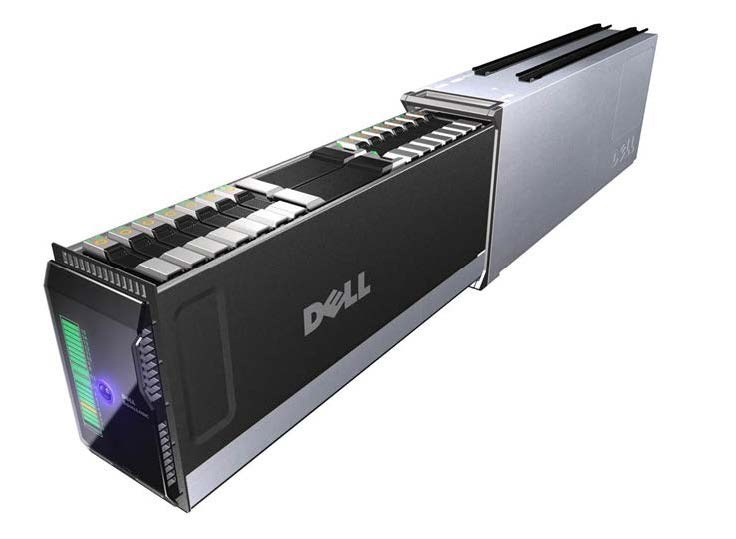
Colossus_EQL_PSM4110_Product_Source_Guide_v6Today at the Dell Storage Forum in Boston, Dell announced their first ever storage blade –  known as the “EqualLogic PS-M4110 Blade Array”.  This new addition to the Dell storage and blade portfolio will provide a fully-virtualized storage, server and networking solution within a single blade chassis.

Continue reading

Dell Unveils ARM-based Server Ecosystem

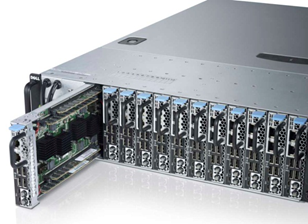
Dell Copper ARM Server Ecosystem

Until today, I’ve not discussed modular hybrid server platforms like Dell’s PowerEdge C platform or HP’s ProLiant SL Servers because I personally do not think they should be classified as a “blade server.”  Perhaps I’m old school, but in order to qualify as a blade server, there must be 1) shared infrastructure 2) shared power/cooling, 3) shared I/O and 4) shared infrastructure management.  When I look at hybrid platforms like the ones mentioned above, I don’t feel they qualify as a blade server – however the marketplace, seems comfortable claiming these products as blade servers, hence today’s posting.  If you agree with me and feel this is not a true blade server, then feel free to move along to another blog article.

Continue reading